Love Emily Font Review
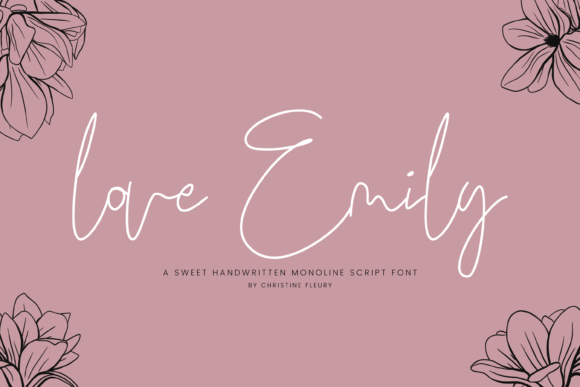
As a web designer, I’m always on the lookout for fonts that bring both personality and professionalism to a site. Love Emily has quickly become one of my go-to choices for adding a soft, elegant touch to digital projects. It’s a handwritten script font with a clean, thin, and smooth vibe that feels like it was made for modern branding and creative web design.
First Impressions in a Hero Section
I first tested Love Emily in a hero section for a boutique online store. The font’s flowing lines and delicate strokes gave the heading a warm, inviting feel that stood out against a minimalist background. It felt right at home with the brand’s aesthetic—chic, approachable, and effortlessly stylish. The font didn’t overpower the design, but it added just the right amount of character to make the message pop.
One thing I noticed right away is how well Love Emily scales on different screen sizes. On mobile devices, it remained legible and didn’t lose its charm, which is crucial for a responsive layout. I paired it with a simple sans serif for the body text, and the contrast helped guide the user’s eye through the page without feeling jarring.
Use Cases in Digital Branding
Love Emily works especially well in headers, call-to-action buttons, and decorative accents. It’s perfect for a portfolio website where you want to highlight your name or a project title. I used it on a coaching site’s landing page, and it brought a personal, authentic feel to the design. It felt like the font was speaking directly to the audience, which is exactly what you want in a brand’s visual identity.
For a product landing page, I placed Love Emily over an image banner to draw attention to a special offer. The font’s fluidity complemented the imagery and helped create a cohesive look. It also worked well as a logo font for a small business, giving the brand a custom, handcrafted feel without needing a full custom design.
Readability and Responsive Design
When using Love Emily in web design, readability is key. It’s best suited for short phrases and headlines rather than long paragraphs. On smaller screens, I found that keeping the font size above 24px ensured it remained clear and easy to read. For dark backgrounds, the font held up well, but I avoided using it on very light backgrounds where the thin strokes could fade into the page.
In responsive layouts, Love Emily maintained its integrity across different breakpoints. I tested it on a blog header and saw that it adjusted smoothly without losing its elegance. It’s also great for overlaying text on images, as the font’s weight doesn’t compete with the visuals—it complements them instead.
Font Pairing for Web Projects
Pairing Love Emily with a clean, neutral font makes it shine. I often use it alongside a sans serif like Open Sans or Lato for body copy. This combination creates a balanced look that’s both modern and readable. For a more editorial feel, I’ve paired it with a serif font like Georgia or Playfair Display, which gives the design a timeless, refined quality.
If you’re working on a SaaS product or a digital course, Love Emily can be a great choice for headings and subheadings. It adds a human touch that helps build trust with users. However, I’d avoid using it for navigation menus or form labels, where clarity and consistency are more important than style.
Practical Tips for Web Designers
Before using Love Emily on a live site, check if it includes webfont formats like WOFF or WOFF2. These ensure fast loading times and better compatibility across browsers. Also, consider the licensing terms—make sure it’s suitable for commercial use if you’re designing for clients or selling digital products.
Another tip is to test the font in different contexts. Try it on a dark background, a light background, and over an image. See how it interacts with other elements on the page. You might also want to explore alternate characters or ligatures if the font offers them, as these can add subtle variations that make your design stand out.
Overall, Love Emily is a versatile and beautiful font that brings a unique personality to web design. Whether you’re creating a portfolio, a product landing page, or a brand identity, it’s a great choice for adding a touch of elegance and warmth to your digital work.