Troyline: A Retro Font for Creative Projects
There I was, staring at a blank brand board, trying to figure out how to bring a new café concept to life. The client wanted something warm, inviting, and a little nostalgic—like the kind of place where you could sit for hours with a good book and a cup of coffee. That’s when I stumbled on Troyline, a retro-styled duo font that felt like it had been waiting for me to find it.
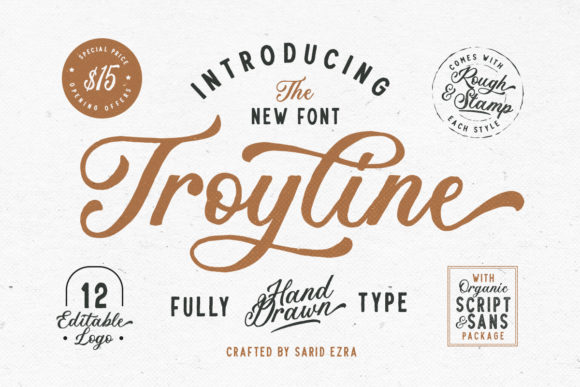
Troyline is a beautiful and retro styled duo font, combining a sans serif and script style. It’s masterfully designed, with a personality that feels both classic and contemporary. The script version has a soft, handwritten feel, while the sans serif offers clean lines and modern appeal. Together, they create a dynamic pairing that can elevate any design project.
The First Mockup: A Logo That Speaks Volumes
I started by testing Troyline on a logo draft. The script version worked perfectly for the café’s name, giving it a personal, artisanal touch. The sans serif version provided a strong, readable base for the tagline. The combination felt balanced and cohesive, like two sides of the same creative story.
As I played with different layouts, I noticed how Troyline responded to various design elements. On a shop sign, it added a sense of warmth and familiarity. On a business card, it felt elegant yet approachable. It wasn’t just a font—it was a character in the brand’s visual language.
Brand Identity: From Packaging to Social Media
Once the logo was set, I moved on to the packaging design. Troyline’s script style made an excellent accent for product labels, adding a handcrafted feel that aligned with the café’s aesthetic. The sans serif version handled longer text with ease, ensuring readability without sacrificing style.
For social media graphics, Troyline became a go-to choice. Whether it was a promotional post or a simple Instagram caption, the font brought a sense of authenticity and creativity. It worked well as a headline font, drawing attention without overwhelming the design.
In editorial design, such as a menu or event flyer, Troyline’s versatility shone through. The script version added a touch of elegance to headings, while the sans serif kept body text clear and easy to read. It was a reliable partner in every layout I created.
Readability and Brand Perception
One of the things I appreciated most about Troyline was its balance between style and functionality. While it’s definitely a display font, it didn’t sacrifice readability. The script version, though more decorative, remained legible even at smaller sizes. This made it suitable for short-form text, like captions or callout boxes.
From a branding perspective, Troyline helped establish a consistent visual identity. Its retro charm gave the café a unique personality, while its modern sans serif counterpart kept things professional and polished. This duality allowed the brand to feel both authentic and trustworthy.
Font Pairing and Design Flexibility
When working with Troyline, I found that pairing it with a serif font often created a nice contrast. The script’s fluidity complemented the structure of a serif typeface, resulting in a design that felt both refined and expressive. It also worked well with other handwritten fonts, especially when aiming for a more eclectic or artistic look.
For digital templates, Troyline proved to be a valuable asset. It was perfect for website headers, where its visual impact could make a strong first impression. In print materials, it added a personal touch that made the brand feel more connected to its audience.
Practical Tips for Testing Troyline
Before committing to a full brand system, I always recommend testing a font across different mediums. With Troyline, I created mockups for everything from product packaging to social media posts. This helped me understand how the font would perform in real-world scenarios.
It’s also worth checking the font’s included styles, alternates, and ligatures. Troyline offers a range of options that can add depth and variety to your designs. Plus, making sure the font supports multilingual characters is essential if your brand serves a diverse audience.
Commercial Use and Licensing
For clients, it’s important to consider commercial font licensing. Troyline is available in multiple file formats, making it easy to integrate into different design workflows. Whether you’re working on a print project, a digital template, or a merchandise design, Troyline offers the flexibility needed for a wide range of applications.
As a designer, I’ve found that using a premium font like Troyline can make a big difference in the final outcome. It adds a level of polish and professionalism that can set a brand apart in a competitive market.
Overall, Troyline is more than just a font—it’s a tool that can help bring creative ideas to life. Whether you’re designing for a café, a boutique, or a handmade shop, this duo font offers the style, versatility, and character needed to make your work stand out.