Luloy: A Script Font for Real-World Design
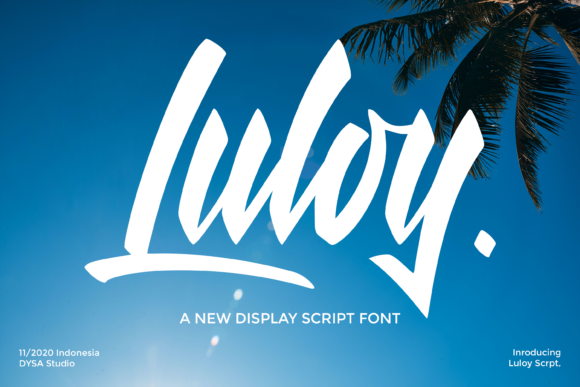
As a designer who’s worked with hundreds of fonts across multiple projects, I’ve come to value a typeface that feels both authentic and functional. Luloy, a script handwritten font, offers a unique blend of elegance and approachability. Its organic flow and subtle imperfections make it feel like it was written by hand, which is exactly what makes it stand out in a sea of digital typefaces.
The First Impression: A Handwritten Mood
Luloy immediately conveys a warm, personal tone. The letters have a softness that feels inviting, making it ideal for branding that wants to communicate creativity, intimacy, or craftsmanship. It doesn’t feel overly ornate or fussy, which is a relief—many script fonts can be too decorative for practical use. Instead, Luloy balances character with clarity, offering a visual personality that’s both expressive and readable.
Its strokes vary slightly, giving it a natural rhythm rather than a rigid structure. This makes it feel more human, less artificial. When used in logos or headers, it adds a sense of authenticity that can elevate a brand’s identity.
Real-World Applications: Where Luloy Shines
In logo design, Luloy works best when paired with clean, modern typography. It’s not the kind of font you’d want as the sole text element in a large headline, but as a secondary or accent font, it can add a touch of personality. For brand identity, it’s great for creating a cohesive look that feels handmade yet professional.
Packaging design benefits from Luloy’s warmth, especially for products targeting a creative or artisanal audience. On product labels, it adds a personal touch that can differentiate a brand on the shelf. In editorial design, it can be used for headings or pull quotes, adding visual interest without overwhelming the reader.
For social media graphics, Luloy’s handwritten style can make content feel more engaging and relatable. It works well in posters, flyers, and invitations, where a personal touch is valued. Merchandise like t-shirts or mugs can also benefit from its charm, especially when used in small text or as part of a larger design.
In web design, Luloy is best suited for headers or short phrases. It may not be ideal for body text due to its intricate details, but as a display font, it can add a unique flair to website elements like banners or call-to-action buttons.
Where to Use Luloy Carefully
While Luloy is versatile, there are situations where it might not be the best choice. Large headlines, for example, can suffer from reduced readability if the font is too thin or cursive. Short phrases work better, as they allow the font to shine without overcomplicating the message.
Brand marks or logos that rely on simplicity may not benefit from Luloy’s complexity. Similarly, premium packaging or high-end marketing materials might require a more refined or structured typeface. In these cases, a serif or sans serif font could provide a more polished look.
Social posts and supporting text should also be approached with caution. Luloy’s flowing nature can make it harder to read at smaller sizes or in low-resolution environments. For these applications, a more legible font might be preferable.
Readability and Brand Consistency
One of the key considerations when using Luloy is its impact on readability. While it’s visually appealing, it requires careful spacing and sizing to maintain clarity. Testing it in black and white is essential, as color can sometimes mask issues with contrast or stroke weight.
For brand consistency, Luloy can be a powerful tool when used strategically. It helps create a distinct visual identity that stands out, but it should be balanced with other fonts to avoid overuse. Pairing it with a serif or sans serif font can help establish a clear hierarchy and prevent visual clutter.
Audience trust and recognition are also important factors. A font that feels too casual or unstructured may not convey professionalism, depending on the brand’s goals. Luloy can be effective for creative or lifestyle brands, but it may not be suitable for industries that require a more formal tone.
Practical Designer Notes
Before finalizing any project with Luloy, I recommend testing it in real-world scenarios. Print mockups, digital prototypes, and different screen sizes can all affect how the font appears. Pay attention to how it looks beside other fonts—especially serif, sans serif, and display fonts—to ensure it complements the overall design.
Check the spacing carefully. Some script fonts can appear cramped or too loose, depending on the design. Compare uppercase and lowercase versions to see how they interact. Also, confirm that the font has proper commercial licensing if it will be used in client work or business projects.
For printable design or digital products, Luloy can be a valuable addition to your font library. It’s particularly useful for Canva templates, Cricut projects, and other creative tools where a handmade feel is desired. As a creative font, it offers a fresh alternative to more standard typefaces.
Final Thoughts: Is Luloy Right for Your Project?
Luloy is a premium font that brings a unique energy to any design. Its handwritten style makes it ideal for branding, packaging, and social media, where a personal touch is appreciated. However, it’s not a one-size-fits-all solution.
If you’re looking for a script font that feels authentic and expressive, Luloy is worth considering. But if you need a more structured or formal typeface, you may find it lacking in certain contexts. As with any font, the key is to use it thoughtfully and in the right place.
For designers and brand owners seeking a fresh, approachable typeface, Luloy offers a compelling option. Just remember to test it thoroughly and pair it wisely to maximize its impact.